
The flexible packaging industry is undergoing a major shift toward materials that combine high performance with improved recyclability. As brand owners, converters, and packaging manufacturers look for alternatives to complex multi-material structures, MDO-PE monomaterial films are emerging as an important solution.
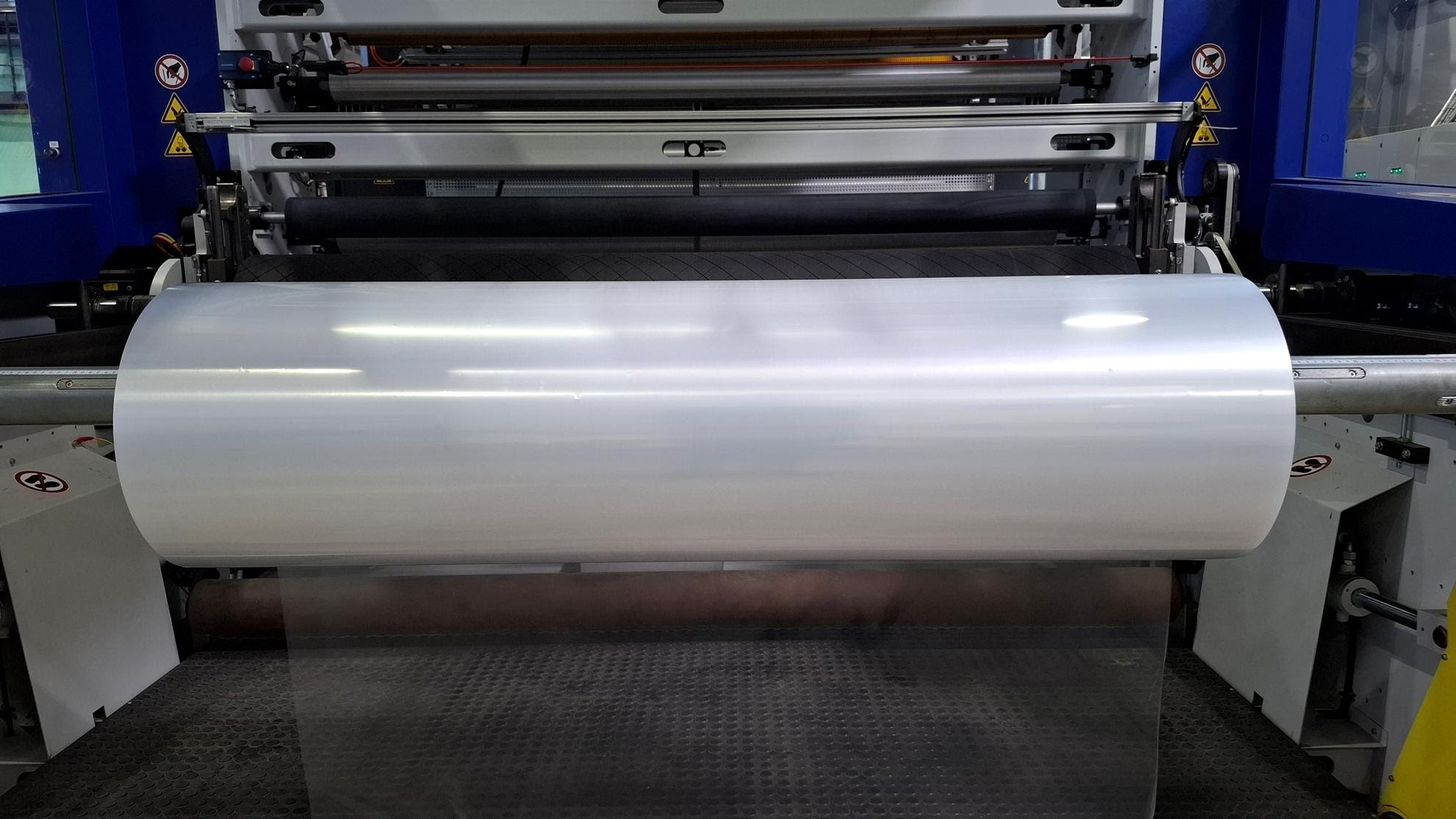
MDO-PE, or Machine Direction Oriented Polyethylene, uses polyethylene as the primary material while improving the film's mechanical and barrier-related properties through machine-direction orientation.
For flexible packaging manufacturers, this development is more than a change in film structure. It is influencing film production, printing, slitting, pouch making, bag making, sealing, and converting technologies.
This article explains how MDO-PE monomaterial films are transforming sustainable flexible packaging production and what converters should consider when investing in machinery for these new-generation packaging structures.
MDO-PE stands for Machine Direction Oriented Polyethylene.
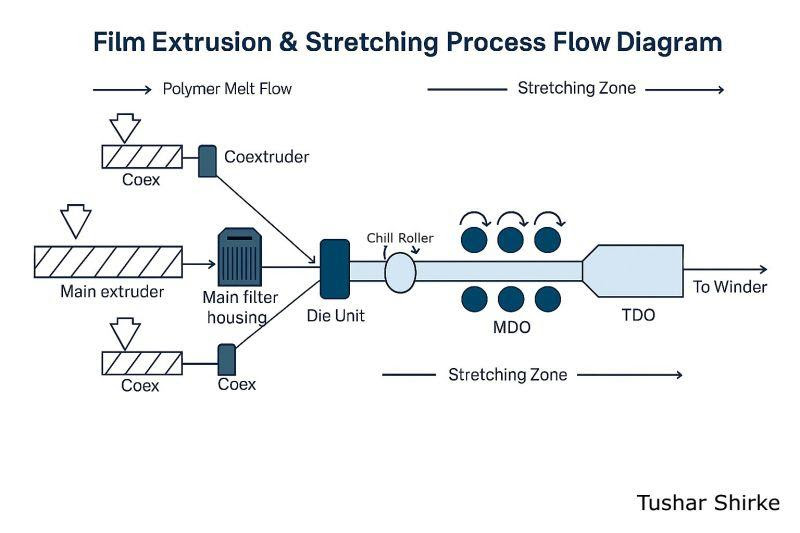
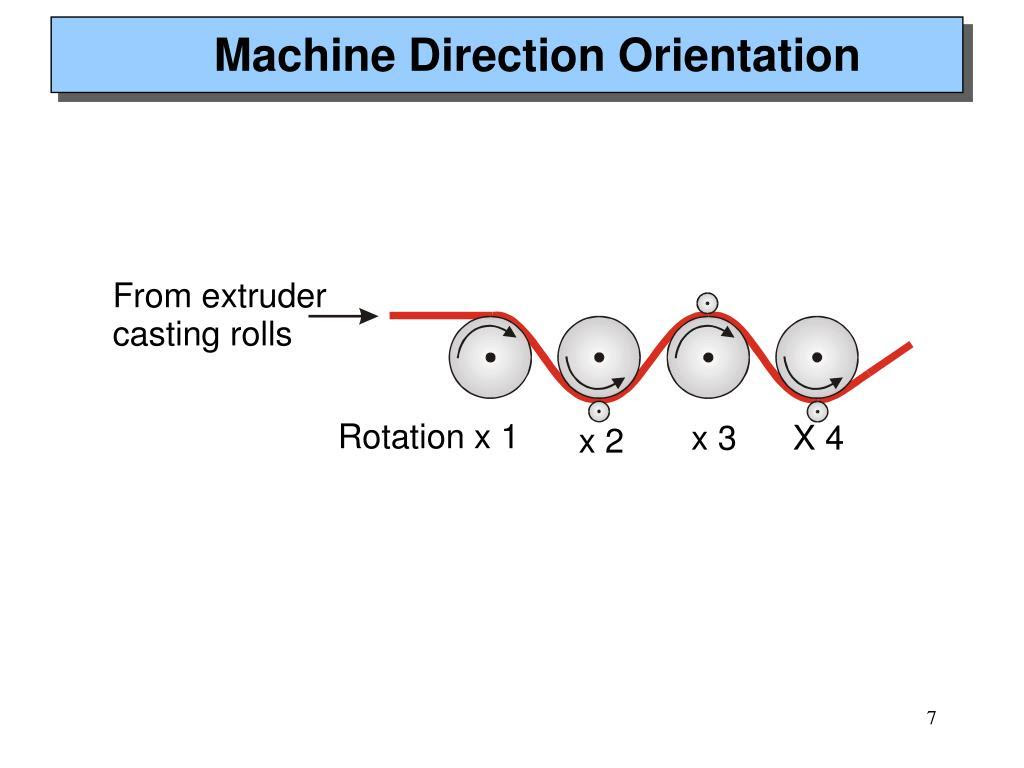
In a conventional PE film, the polymer film is produced and then used in packaging applications with its natural mechanical properties. In MDO processing, the PE film is heated and stretched predominantly in the machine direction.
This orientation can improve properties such as:
The result is a PE-based film that can be engineered for demanding flexible packaging applications while maintaining a monomaterial PE structure.
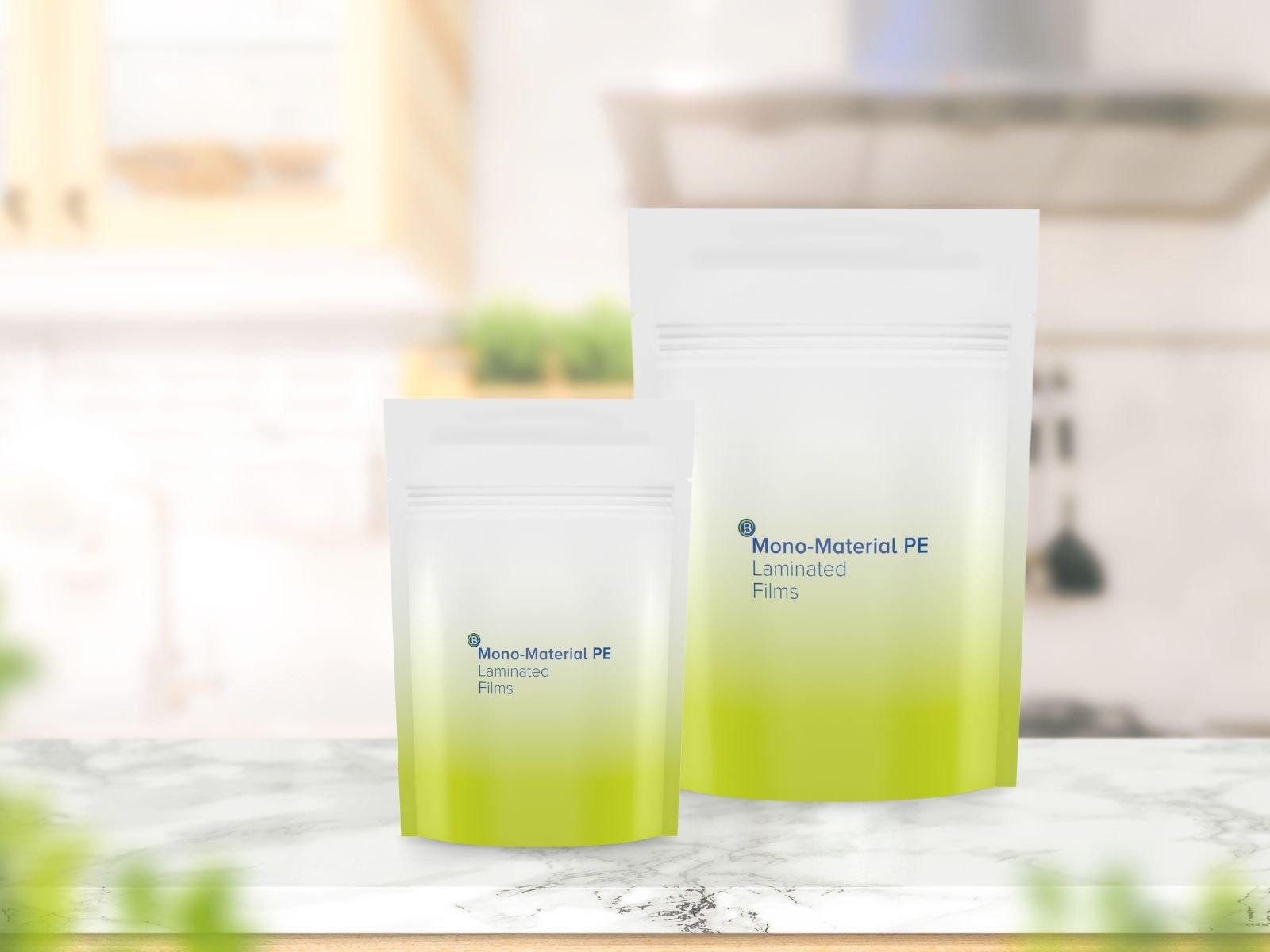
Traditional flexible packaging often relies on multi-layer structures made from different polymers and materials to achieve the required combination of strength, sealability, barrier performance, printability, and appearance.
For example, a packaging structure may combine different layers to provide:
The challenge is that these different materials can make recycling more complicated.
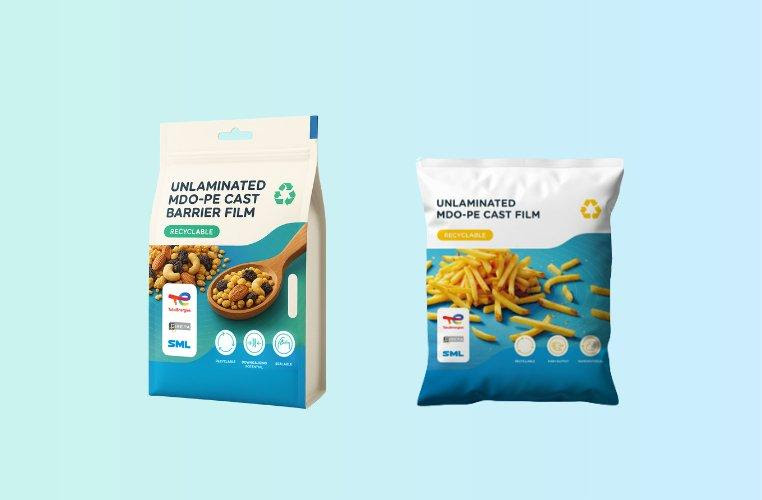
Monomaterial packaging approaches attempt to simplify the material structure by using predominantly one polymer family, such as PE or PP, while engineering the film to deliver the required packaging performance.
For PE-based packaging, MDO technology can help create films with properties suitable for applications that traditionally relied on more complex structures.
From: Multi-material structures → high performance but potentially more difficult recycling pathways
Toward:Monomaterial structures → engineered performance with a simpler material family
This is one of the reasons MDO-PE has attracted increasing attention from packaging companies looking to develop more recyclable flexible packaging formats.
One of the biggest advantages of MDO-PE is that orientation changes the performance characteristics of the film.
During MDO processing, the film is heated and stretched in the machine direction under controlled conditions.
This process can significantly alter the film's mechanical properties and thickness distribution.
MDO processing can increase the stiffness of PE film.
This can be particularly useful for packaging applications where the finished package needs to have better structure and handling characteristics.
Orientation can improve tensile strength in the machine direction, allowing manufacturers to engineer films that deliver the required mechanical performance with optimized material usage.
Higher performance per unit of thickness can create opportunities for lightweighting.
For packaging manufacturers, this can mean achieving required package performance while reducing the amount of material used, depending on the application and film design.
Higher performance per unit of thickness can create opportunities for lightweighting.
Depending on the resin, structure, and processing conditions, MDO technology can produce films with improved optical characteristics that are valuable for premium packaging applications.
Engineered MDO films can be designed for downstream converting processes including:
Indian manufacturers with established international service networks can provide this support while maintaining the cost advantages of manufacturing in India.
For international buyers evaluating converting machines from India, Vishva Machinery offers an example of an export-focused Indian machinery manufacturer.
Vishva manufactures plastic bag-making, pouch-making and film-converting machinery for a range of applications.
Designed for applications including:
However, the exact converting characteristics depend heavily on the film structure and production process.
One of the major reasons MDO-PE is receiving attention is its compatibility with the broader development of PE-based recyclable packaging structures.
A monomaterial approach does not automatically mean that every package is recyclable. Actual recyclability depends on the complete packaging structure, additives, inks, adhesives, barrier coatings, local collection systems, and applicable recycling infrastructure.
Nevertheless, designing packaging around a single polymer family can help simplify the material composition.
This creates an important opportunity for packaging manufacturers:
Develop packaging structures that balance performance, material efficiency, manufacturing requirements, and end-of-life considerations.
For converters, this means sustainability is increasingly becoming a machine and process consideration, not simply a material-selection decision.
The adoption of MDO-PE films is also changing the requirements placed on converting equipment.
A film that behaves differently during sealing, cutting, web handling, tension control, or pouch formation can require converters to carefully evaluate their existing machinery.
This is particularly important when transitioning from conventional laminated structures to newer PE-based structures.
MDO-PE films can have different stiffness, elongation, tension, and handling characteristics compared with conventional films.
Therefore, slitter rewinders need precise tension control and web handling to maintain roll quality.
Important machine considerations include:
For converters handling large volumes of MDO-PE film, consistent roll quality can directly affect downstream production efficiency.
MDO-PE films are increasingly being evaluated for applications such as:
Pouch-making equipment must be able to handle the film consistently while maintaining:
The sealing window is especially important because PE-based structures can behave differently from conventional laminate constructions.
Heat sealing is one of the most important considerations when converting MDO-PE films.
A packaging structure can have excellent mechanical properties but still fail commercially if the seal is inconsistent.
Converters need to evaluate:
Machine manufacturers therefore need to develop sealing systems capable of delivering consistent heat transfer and pressure at high production speeds.
This is where modern servo-driven pouch and bag-making machines can provide advantages in terms of control and repeatability.
The shift toward sustainable packaging is not simply a material innovation.
It is also a machinery innovation.
As packaging structures become thinner, more engineered, and more demanding, converting equipment needs to provide greater control over the entire process.
Provide precise control over feeding, cutting, sealing, and synchronization.
Helps maintain consistent web movement and reduce wrinkles, stretching, and registration problems.
Important for maintaining consistent sealing performance.
Essential for printed films and high-speed pouch production.
Helps maintain accurate film positioning throughout the converting process.
Can enable high-speed cutting for applications where production output is a key requirement.
For converters investing in new equipment, the objective should not simply be to purchase a machine that can technically process MDO-PE.
The more important question is:
Can the machine consistently process the film at the required commercial production speed and quality?
Sustainability has historically been associated with higher production costs. However, advances in film engineering and manufacturing are changing the economics.
MDO-PE can create opportunities for:
Higher mechanical performance can allow manufacturers to investigate thinner structures while maintaining required performance.
Using a PE-based structure can potentially reduce complexity compared with certain multi-material constructions.
If the film and converting equipment are appropriately engineered, MDO-PE structures can be processed on high-speed converting lines.
When film thickness can be optimized without compromising package performance, manufacturers may be able to reduce material consumption per package.
For packaging companies, the commercial objective is therefore not simply "sustainable packaging."
It is:
MDO-PE technology can be relevant to a broad range of flexible packaging applications.
Potential applications include:
MDO-PE structures can be considered for:
Applications may include:
PE-based engineered films can also be relevant to:
The suitability of MDO-PE depends on the specific film structure, barrier requirements, sealing characteristics, and end-use application.
If your company is planning to process MDO-PE films, machine selection should go beyond maximum machine speed.
Here are some of the most important factors to evaluate.
Ask the machinery manufacturer:
A machine's advertised maximum speed is not necessarily its sustainable production speed.
Request production trials using your actual MDO-PE film.
Measure:
Evaluate the machine's ability to maintain consistent seals across different operating conditions.
This is particularly important when using engineered PE structures.
MDO films can require careful web handling.
Ask about:
For converters producing multiple SKUs, fast changeovers can have a major impact on overall machine utilization.
Consider:
A high-speed machine is only valuable if it can maintain production.
Evaluate:
The move toward MDO-PE is part of a broader transformation in flexible packaging.
Packaging manufacturers are increasingly being asked to achieve several objectives simultaneously:
Lower material usage
↓
High packaging performance
↓
Improved recyclability
↓
High production efficiency
↓
Competitive packaging costs
MDO technology can play an important role in achieving this balance.
However, the future will not be defined by film technology alone.
The entire value chain will need to evolve—from resin suppliers and film producers to printers, laminators, converters, machinery manufacturers, brand owners, recyclers, and packaging designers.
For machinery manufacturers, the rise of MDO-PE represents a significant opportunity.
The next generation of converting machines will need to be designed around increasingly engineered films.
This means machine builders need to focus on:
Machine manufacturers that understand the relationship between film structure and converting performance can help customers transition to newer packaging materials with fewer production challenges.
MDO-PE monomaterial films are becoming an important technology in the development of more recyclable and material-efficient flexible packaging.
By combining polyethylene-based structures with machine-direction orientation, film manufacturers can engineer properties such as stiffness, tensile strength, and dimensional stability for demanding packaging applications.
But the transformation does not stop at film production.
For converters, the adoption of MDO-PE also creates new requirements for slitting, rewinding, pouch making, bag making, sealing, web handling, and automation.
The packaging companies that successfully adopt these materials will need to evaluate the entire production system—not just the film.
For machinery buyers, the key is simple: test the actual film, measure actual production performance, and select converting equipment engineered for the requirements of the new material structure.
As flexible packaging continues moving toward monomaterial solutions, MDO-PE is positioned to become an increasingly important part of the industry's transition toward more sustainable packaging production.
If you are planning to manufacture pouches, bags, or other flexible packaging from MDO-PE and PE-based monomaterial films, choosing the right converting technology is critical. At Vishva Machinery , we develop high-speed plastic bag and pouch-making machinery designed for demanding flexible packaging applications. Contact our team to discuss your film structure, bag or pouch application, required production speed, and machine configuration and identify a suitable converting solution for your production requirements.